

Florida: The Next AI Data Center Frontier?
March 12, 2026 - This Week's News from Central Florida
Welcome to this week’s edition of the Central Florida Times. We are an independent, reader-supported newsletter focusing on the most important local news stories from Florida.
Here’s the latest from Central Florida…
Florida Emerges as a Data Center Frontier Amid AI Boom
Florida could soon become the next major destination for the rapidly expanding data center industry as the artificial intelligence boom compels technology companies to seek locations beyond saturated markets like Virginia, where data centers already consume a quarter of the state’s total power demand.
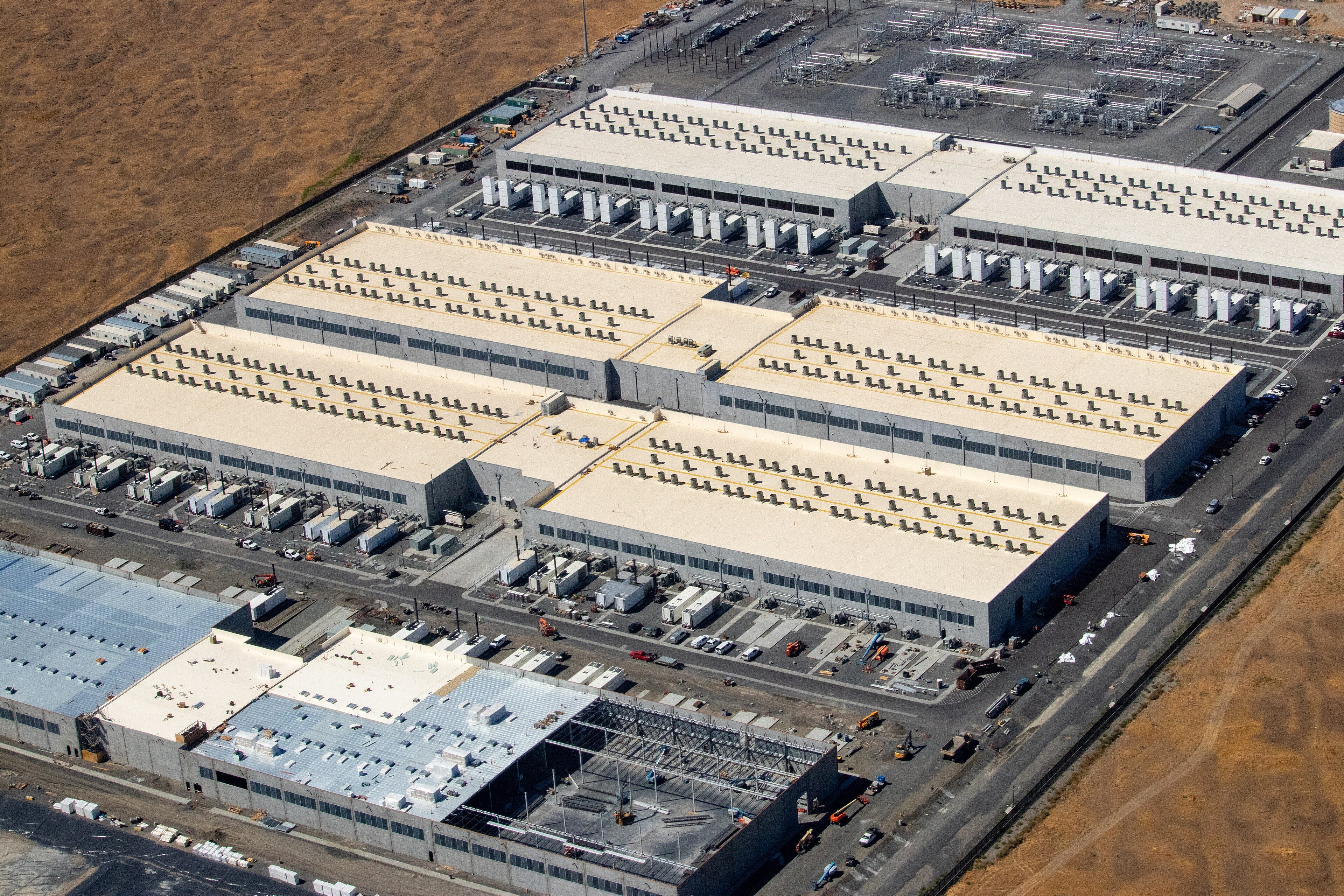
Tech Giants Eye Florida for Digital Infrastructure Expansion
“Hyperscalers,” including Google, Meta, and Amazon, are actively seeking to expand their digital footprints beyond traditional technology hubs to support artificial intelligence and cloud computing operations. Major projects are already spreading across the Southeast, including the Western Hemisphere’s largest data center planned for Louisiana. However, comparable investment in Florida has notably lagged despite the state’s advantages.
Despite its business-friendly tax climate and abundant available land, industry experts cite hurricanes and resulting electrical grid disruptions as historical deterrents for companies considering the Sunshine State. Nevertheless, industry organizations argue that this dynamic could shift dramatically as demand for digital infrastructure continues to accelerate.
The Data Center Coalition, representing major technology firms, indicates Florida is increasingly featured in future expansion discussions as development opportunities become more economically compelling. Industry advocates contend that advancing technology may effectively mitigate storm-related power disruption concerns, while data center operations could actually strengthen grid resilience through massive electric bill payments funding critical infrastructure upgrades to harden Florida’s electrical system.
Environmental and Social Challenges Threaten Development
This potential “digital gold rush” faces significant environmental and social obstacles that could complicate Florida’s emergence as a data center hub. These facilities are notorious for their enormous water consumption—often requiring millions of gallons daily for cooling operations—and their capacity to substantially increase electricity rates for residential customers.
Growing skepticism has emerged nationwide, including from Governor Ron DeSantis, regarding data centers’ potential to disrupt communities. At least six states spanning from New York to Georgia have proposed construction moratoriums while policymakers work to address mounting constituent concerns about utility costs, water depletion, and environmental impacts.
The data center industry has pledged to fully cover utility infrastructure costs, preventing expenses from transferring to residential ratepayers while delivering substantial employment opportunities and economic benefits to host communities.
State Lawmakers Debate Regulatory Framework
State legislators in Tallahassee are currently debating comprehensive regulations as communities increasingly raise concerns about the proliferation of large-scale data centers. Opposition from residents and local government leaders across Florida is mounting over associated impacts, including utility rate increases, excessive water consumption, noise pollution, and greenhouse gas emissions from diesel backup generators.
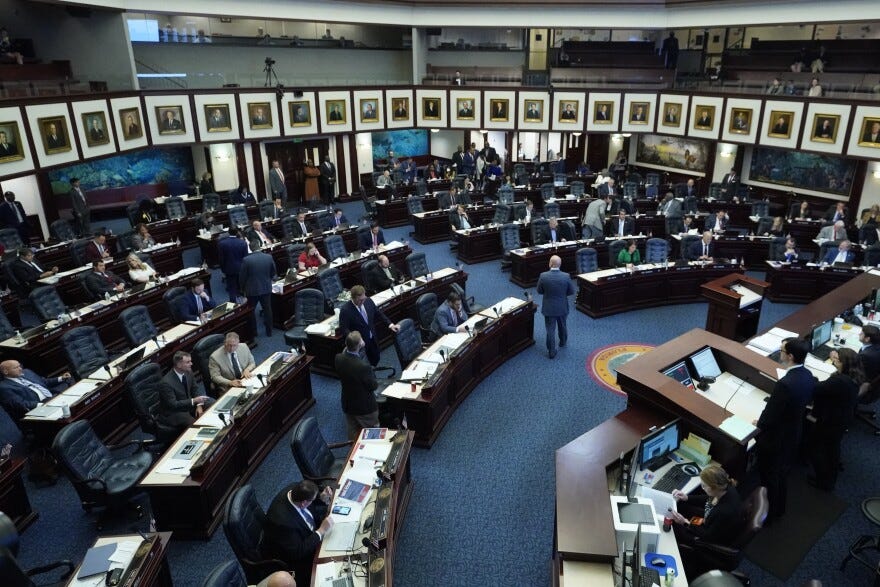
On Wednesday, the Florida House significantly weakened proposed legislation regulating large data centers, removing key provisions that technology companies had vigorously opposed. Despite earlier commitments from Governor Ron DeSantis to curb the secrecy surrounding these “hyperscale” facilities, lawmakers amended Senate Bill 484 to permit government officials to sign nondisclosure agreements (NDAs) with technology developers.
This legislative shift effectively allows multibillion-dollar corporations to negotiate site selections behind closed doors, shielding proprietary business data from public scrutiny. Proponents of the amendment argued that confidentiality protections are sometimes necessary during early-stage development when companies evaluate potential locations and handle sensitive proprietary business information.
Earlier versions of the legislation had explicitly prohibited such nondisclosure agreements and mandated that local economic development agencies notify residents when data center proposals were under consideration. Both consumer protection provisions were stripped from the final legislation.
The revised measure retains some regulatory safeguards. It would prevent water management districts from approving projects that threaten local water resources and require data centers to cover their complete electricity infrastructure costs, ensuring expenses are not transferred to residential customers.
The bill now returns to the Florida Senate for final approval before reaching Governor DeSantis’ desk. This legislative pivot occurs amid reported political pressure, with some observers suggesting the Trump administration has influenced the House’s more industry-friendly regulatory stance.
Central Florida Communities Battle Proposed Mega-Projects
Local tensions are escalating over several proposed data center developments throughout Central Florida as communities confront the reality of hosting these massive industrial facilities.
In Citrus County, the Deltona Corporation is advancing plans for an expansive 813-acre industrial park project, potentially including data center facilities. The initiative aims to expand industrial zoning to accommodate the development. Proponents argue the project could generate approximately 2,500 construction jobs, 825 permanent positions, and yield $105 million in property tax revenue over time. However, local residents express serious concerns that this development would fundamentally alter the area’s rural character while placing unsustainable demands on water and electrical power resources. As opposition continues to intensify, county commissioners have postponed a final decision for several weeks to allow additional community input and technical review.
A similar debate is unfolding in Fort Meade, where the City Commission recently delayed voting on a proposed data center campus by Stonebridge, which would comprise eight buildings across approximately 1,100 acres. Opponents in this small community of roughly 5,000 residents fear the massive industrial facility could severely strain both water and power supplies, while significantly increasing noise pollution levels. Supporters counter that the facility could generate up to $138 million in annual revenue for the community, transforming Fort Meade’s economic outlook and funding critical public services.
Balancing Economic Growth and Quality of Life
As the artificial intelligence revolution accelerates, Florida finds itself at a crossroads between becoming a cornerstone of the nation’s digital infrastructure and preserving the environmental and community qualities that define much of the state. The outcome of debates unfolding in Tallahassee and in rural areas like Citrus County and Fort Meade will likely shape not only where billions in technology investment ultimately land, but also how Florida defines sustainable growth in the decades ahead. Whether the state can strike a balance between economic opportunity, infrastructure demands, and community trust may determine if the data center boom becomes a transformative opportunity—or a flashpoint in the broader debate over Florida’s future development.
Florida Legislature Gridlock Kills Rural Renaissance Plan, School Voucher Fix
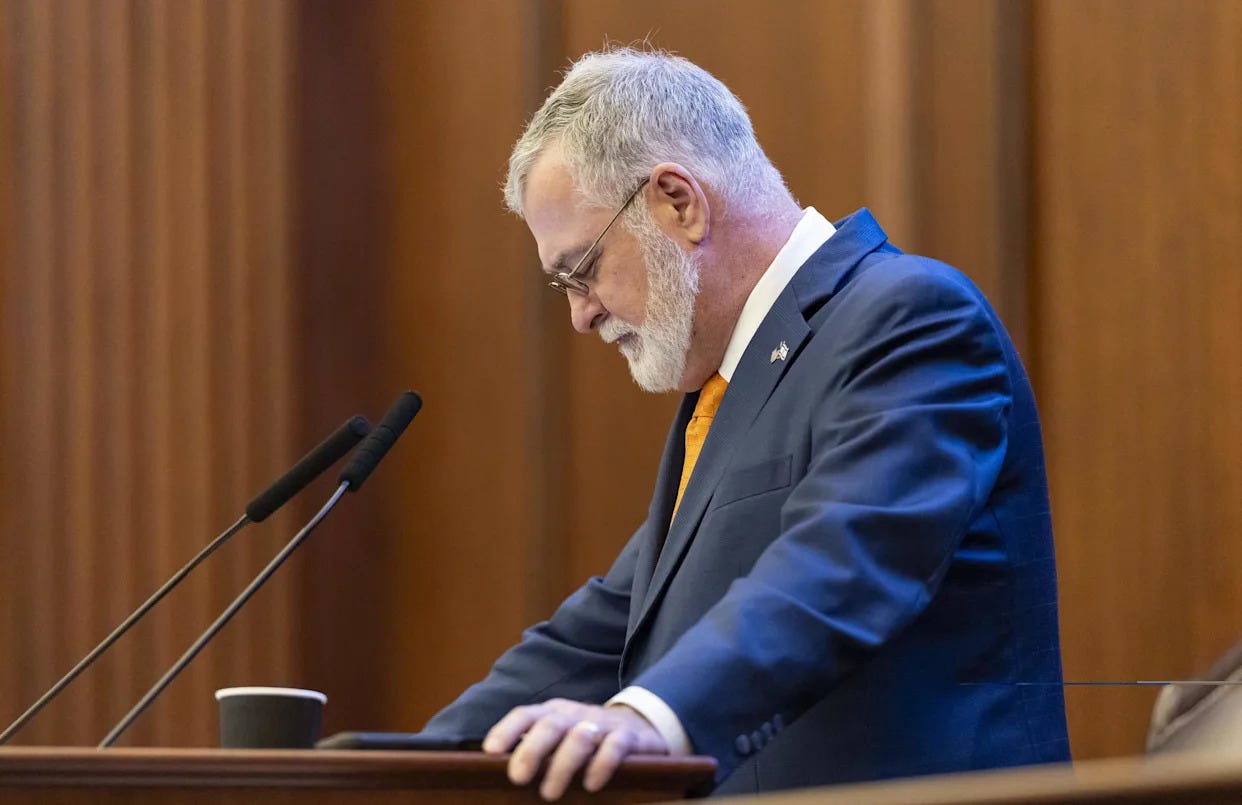
Key legislative priorities championed by Senate President Ben Albritton (R-Wauchula) appear to have been dealt a fatal blow this session after the Florida House of Representatives signaled it will not take up bills that have not already cleared a House committee. House Speaker Daniel Perez (R-Miami) told reporters last week that the chamber will not advance dormant proposals during the final days of the legislative session. The stance effectively stalls the “Rural Renaissance” initiative, which would have created an Office of Rural Prosperity to help rural communities access state and federal funding. The legislation also sought to revitalize struggling counties by providing $1 million in annual population-growth grants and $15,000 in student-loan repayment incentives for rural teachers. Furthermore, it would have doubled the property tax revenue threshold for a county to be classified as “fiscally constrained,” allowing more rural areas to qualify for specialized state subsidies and infrastructure support. While the policy framework has stalled for a second consecutive year, a proposed $144.8 million appropriation for rural infrastructure, healthcare, housing, and education remains an active part of budget negotiations. Another stalled proposal from Sen. Don Gaetz (R-Niceville) that aimed to fix the state’s rapidly expanding $4 billion school voucher system appears dead in the House. The proposal, which passed the Senate unanimously, would have strengthened oversight of the program after a state audit revealed failures to properly track funding for 30,000 students and identified potential multi-million-dollar fraud risks. Gaetz warned that without these reforms, transparency will continue to vanish for taxpayers. With budget talks between the House and Florida Senate deadlocked, lawmakers will need to extend the session for the second straight year to finalize spending plans for the upcoming fiscal year.
Florida Legislature Passes One of the Nation’s Strictest DEI Bans
The Florida Legislature has approved a bill that prohibits cities and counties from funding, implementing, or promoting diversity, equity, and inclusion (DEI) initiatives, sending the measure to Gov. Ron DeSantis for his expected signature. The proposal, SB 1134, could allow state officials to remove elected leaders who violate the law. The legislation passed the Florida House of Representatives after clearing the Florida Senate the week before. Bill sponsor Rep. Dean Black (R-Jacksonville) championed the move, declaring that “DEI has to D-I-E” to ensure equal opportunity for all Floridians. He added that the measure prevents governments from backing initiatives that divide communities. Democratic lawmakers vehemently opposed the measure, arguing it is overly broad and could infringe upon constitutional rights. They warned that banning DEI initiatives would harm Florida’s tourism and economic growth, particularly by undermining events celebrating diversity. Advocacy groups like Equality Florida labeled the legislation as a “dangerous” form of government overreach intended to silence marginalized communities. If implemented, the law faces likely legal challenges.
Orange County School Board Votes to Close 7 Schools
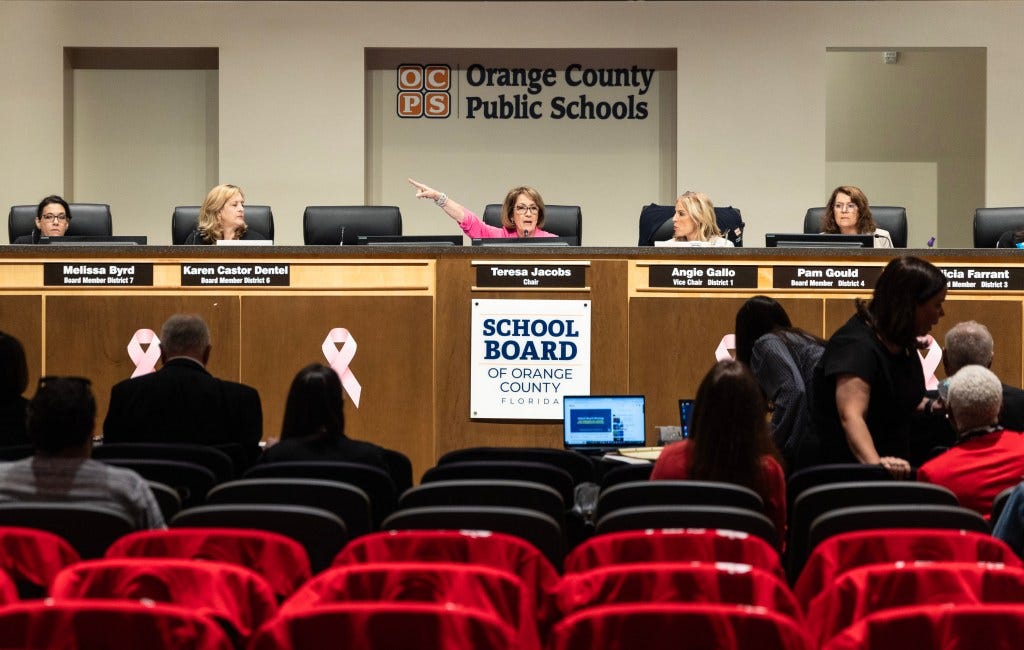
The Orange County Public Schools board has approved the closure of seven campuses due to declining enrollment across the district. During a meeting on Tuesday, the Orange County School Board voted to close six elementary schools—McCoy, Bonneville, Orlo Vista, Chickasaw, Eccleston and Meadow Woods—as well as Union Park Middle School. District officials said shrinking student populations attributed to sinking birthrates, rising local housing costs, and the expansion of Florida’s school voucher programs contributed to the decision. Students currently attending the schools will be reassigned to nearby campuses through rezoning beginning next school year. Some parents criticized the move, arguing district leaders had already decided to close the schools before public discussions were complete. Board members noted the decision was difficult, but emphasized that splitting limited resources among half-empty buildings was fiscally unsustainable amid enrollment declines.
Tampa Bay Faces Worst Water Shortage in 50 Years
Tampa Bay’s regional water supply authority says the area is experiencing one of its most serious water shortages in nearly 50 years, prompting officials to declare a “Stage 3 Extreme Regional Supply Shortage.” The declaration from Tampa Bay Water came after prolonged rainfall deficits reduced river flows and lowered reserves at the C. W. Bill Young Regional Reservoir, which is currently holding about 7 billion gallons—less than half of its 15.5-billion-gallon capacity. Officials reported rainfall totals nearly a foot below normal, with the last significant storms arriving in September. Water managers have also stopped drawing from local rivers, which normally supply more than 40% of the region’s drinking water. To meet demand, utilities are relying more on groundwater and the Tampa Bay Seawater Desalination Plant, while urging residents to conserve water as the historically driest months of March and April arrive.
Florida House and Senate Deadlocked Over Limits to DeSantis’ Emergency Spending Fund
The Florida House of Representatives has voted to renew the state’s emergency spending fund while adding new restrictions on how it can be used, setting up a potential standoff with the Florida Senate as the legislative session nears its end. Lawmakers amended a Senate measure, SB 7040, to include additional oversight provisions. The proposal would require the governor’s office to provide quarterly spending reports to legislative leaders and allow them to object to certain uses of the fund, including spending tied to prolonged disaster declarations or “man-made” emergencies. It would also prohibit the purchase of high-cost assets like aircraft, boats, or motor vehicles. Gov. DeSantis’ use of emergency reserves has drawn scrutiny after hundreds of millions were utilized to finance immigration enforcement initiatives, including for operations at the ‘Alligator Alcatraz’ detention center. With the budget still unresolved and the session nearing its scheduled conclusion, Senate President Ben Albritton (R-Wauchula) indicated his chamber may prefer to revisit the issue during an extended or special session.
DeSantis Weighs Approval of Legislation to Restrict Sunshine Skyway Cruise Port Proposal
The controversial proposal to construct a cruise ship port near the Sunshine Skyway Bridge may officially be dead in the water after the Florida House unanimously approved legislation limiting dredging in the area cruise ships would need to traverse. The legislation, which now moves to Gov. Ron DeSantis for final approval, expands the protected boundaries of the Terra Ceia Aquatic Preserve in Manatee County. Critically, the bill prohibits major dredging operations within the preserve, limiting excavation strictly to minimal needs for boat ramps and public docks—and only if water quality remains unaffected. Port developer SSA Marine had been studying a cruise terminal project on land south of the Sunshine Skyway, arguing the facility could accommodate larger ships that cannot fit beneath the bridge. Despite the developers’ attempt to mitigate concerns by purchasing the nearby Rattlesnake Key for conservation, local opposition was overwhelming. Environmental advocates and over 12,000 petition signers argued that industrial-scale dredging would devastate the fragile ecosystem.
Gold and Silver Coins to Become Legal Tender in Florida
The Florida Legislature has approved legislation establishing rules for gold and silver coins to be used as legal tender in the state beginning July 1, 2026. The Florida Senate voted 31–1 on the measure, with Sen. Kathleen Passidomo (R-Naples) casting the lone dissenting vote. The Florida House of Representatives previously passed the proposal unanimously. The bill directs the Florida Department of Financial Services and the Florida Office of Financial Regulation to implement guidelines governing the use of qualifying gold and silver coins. Under the measure, approved coins will be exempt from sales tax, and government agencies may accept them electronically, but are not required to do so. The law also states that no individual or business may be required to accept coins as payment. The bill now heads to Gov. DeSantis for his approval.
Orlando Unveils Early Design Plans for Pulse Nightclub Memorial

Nearly a decade after the 2016 mass shooting at Pulse Nightclub, the City of Orlando has revealed preliminary design plans for a permanent memorial honoring the 49 victims killed in the attack. City officials presented 30% of the memorial’s design plan during a public meeting, marking a key milestone in the project. The proposal, designed by Borrelli + Partners, includes a reflection pool, healing garden, survivor’s wall, and a row of columns commemorating each of the 49 lives lost. Designs also feature an “Angel Ellipse” with a shifting rainbow gradient and a stylized Pulse tower. The memorial park will be built on the site where the nightclub once stood at Orange Avenue and Kaley Street. Construction on the permanent memorial is expected to begin in late September 2026.
Florida Senate Approves $31M to Restore Funding for AIDS Drug Program
The Florida Senate has approved a proposal aimed at restoring access to medications for thousands of Floridians affected by recent cuts to the state’s AIDS Drug Assistance Program. Lawmakers added a $31 million amendment to a broader prescription drug bill to reinstate eligibility for thousands of people removed from the program earlier this year. The measure now awaits consideration by the Florida House of Representatives, where House Speaker Daniel Perez (R-Miami) said he still needs to review the proposal. The funding would temporarily reverse drastic eligibility cuts implemented by the Department of Health (DOH) on March 1, which slashed the income threshold from 400% to just 130% of the federal poverty level. The move came amid a reported $120 million funding shortfall that threatened to block over 10,000 HIV-positive individuals from life-saving medications and insurance premium assistance. The amendment is intended to stabilize the program until lawmakers finalize the state budget and long-term funding solutions are negotiated.
Mosaic Seeks Massive 180-Acre Expansion for Radioactive Waste Pile Near Tampa Bay
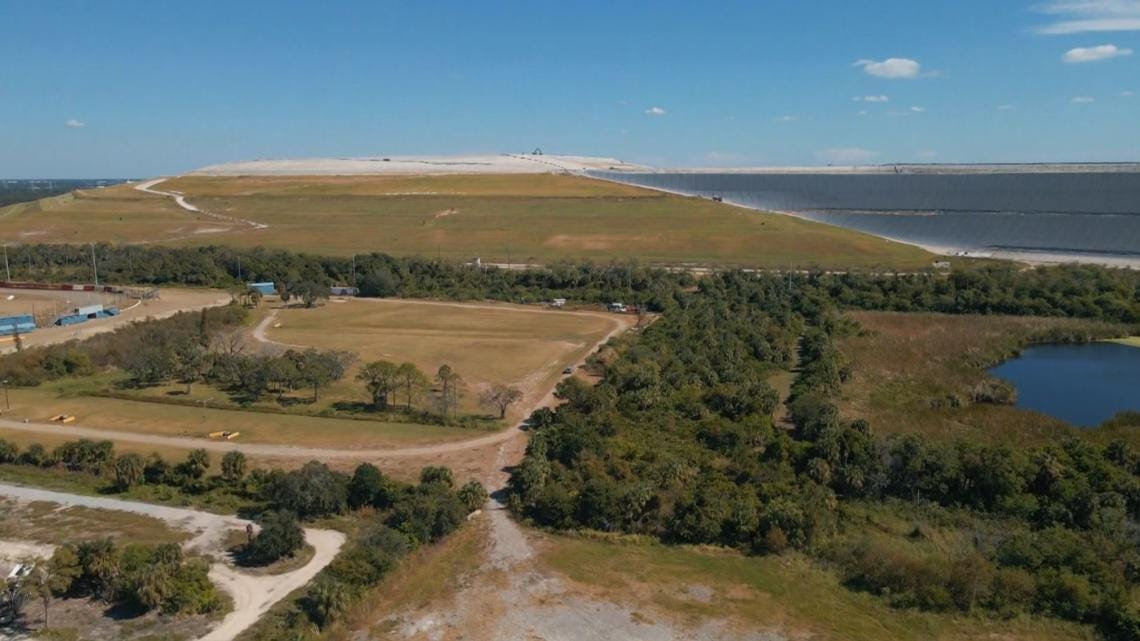
Fertilizer producer The Mosaic Company is seeking federal approval to expand a large phosphate waste storage site in Hillsborough County, a move that could extend operations at its Riverview facility for more than a decade. The proposal asks the U.S. Army Corps of Engineers for a permit under the Clean Water Act to widen an existing phosphogypsum “gypstack” by nearly 180 acres. Phosphogypsum is a radioactive byproduct of phosphate mining that carries carcinogens, toxic heavy metals, and poses cancer risks. The project would require filling about 35 acres of wetlands—less than a mile from Tampa Bay’s shoreline—with an estimated 305,000 cubic yards of material. The fertilizer giant warns it has only six years of storage remaining for phosphogypsum at its Riverview gypstack. The proposed expansion would extend the plant’s lifespan by 16 years. Environmental advocates are contesting the plan, citing concerns over storm surge vulnerability and potential pollution leaks near the Alafia River. The project is being fast-tracked under federal infrastructure programs, yet it still requires multi-level regulatory approval. Federal regulators are accepting public comments on the proposal through March 19.
St. Petersburg to Expand E-Bike Parking Infrastructure
The St. Petersburg City Council has approved new funding to improve bike parking as ridership in the city’s e-bike-share program continues to grow. During a recent meeting, council members unanimously approved $10,000 to upgrade aging bike racks and expand parking infrastructure across St. Petersburg. Officials said the improvements are intended to support the increasing number of riders using the city’s shared e-bike system operated by Lime. The bike-share program launched in 2016 with traditional bicycles before adding electric bikes in 2021. Today, up to 300 e-bikes are available throughout downtown and nearby neighborhoods. City officials reported more than 72,000 trips have been recorded since partnering with Lime, with ridership surging during large events such as St. Pete Pride and the Firestone Grand Prix of St. Petersburg.
To never miss an update, subscribe to the Central Florida Times by clicking the banner below:

I still do not agree that Orange County taxpayers must provide $12 million (and up) for the Pulse Memorial. Sorry those folks died, but let the people who want the memorial pay for it. The first funding was stolen by the organizer - bet she’s not in jail.